Applications
Lining
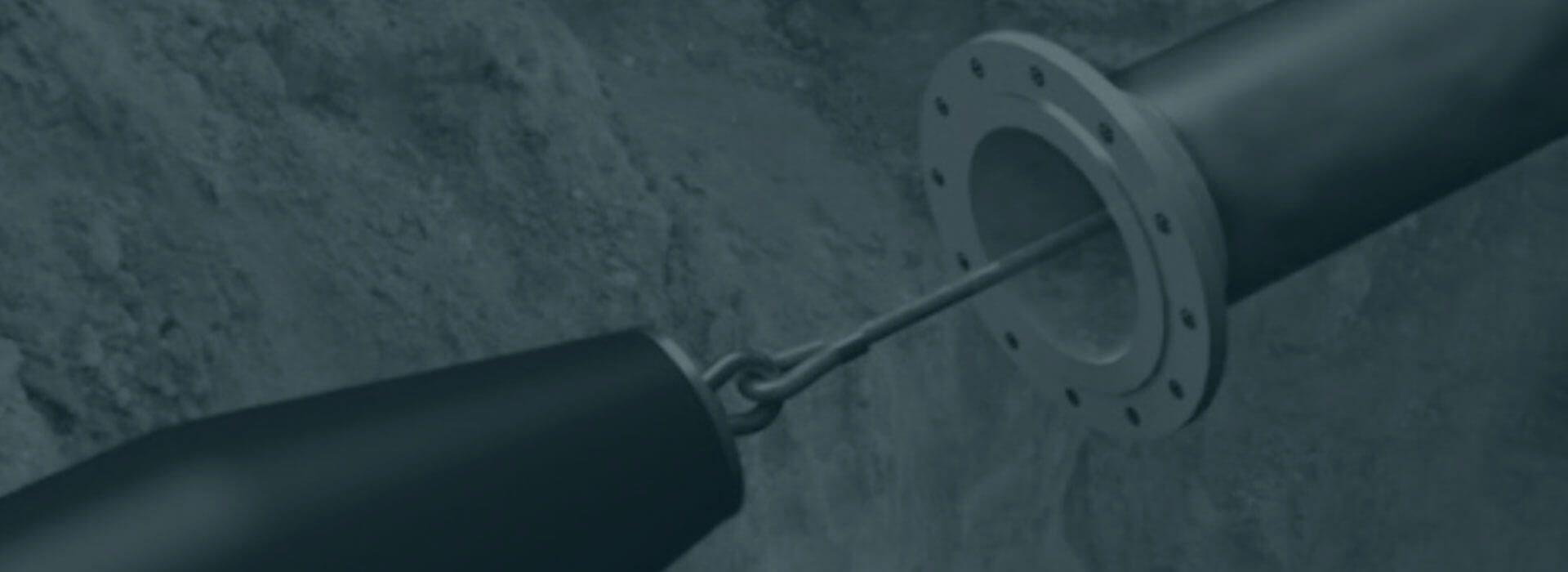
A damaged or worn pipeline renewed from the inside: a continuous polyethylene pipe is pulled into the old one between two pits, with no open trench along the route.
The technology
British Gas pioneered polyethylene lining in the 1970s. The system has since been refined with partners including DuPont, and has more than 8,000 km installed worldwide.
For over 40 years it has been used in oil and gas, water and mining. Recent developments include end fittings, flange connections, Victaulic couplings and monitoring systems, several of them patented.
How a liner goes in
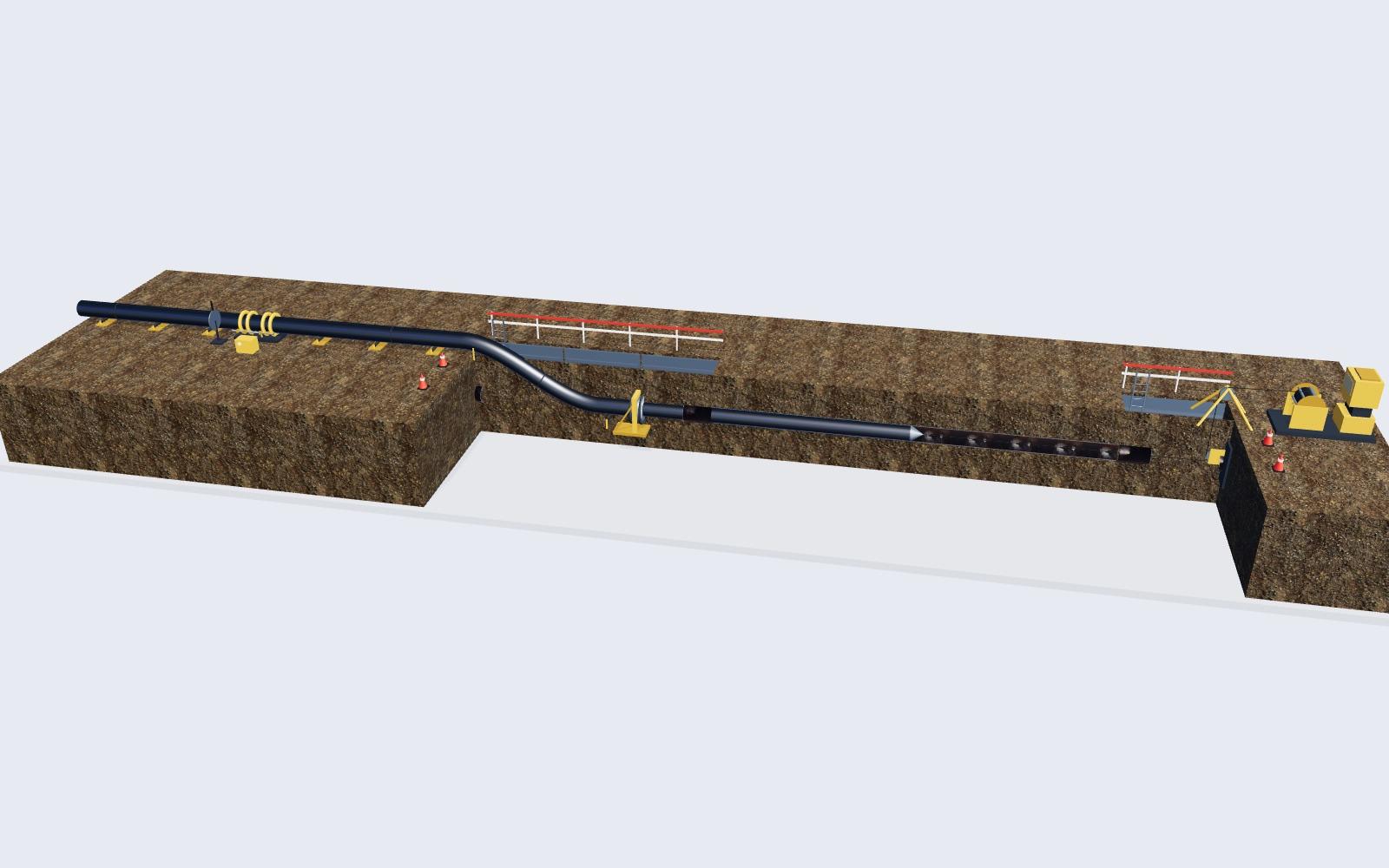
The old pipe stays in the ground and becomes a sleeve. Work happens in two excavations: an insertion pit where the new pipe enters and a receiving pit where the winch pulls it out.
Open the model to follow a close-fit installation, from survey and cleaning to the reconnected line.
Interactive model
A new pipe inside the old one
Six steps of a close-fit lining job, from the CCTV survey to the reconnected line, in a 3D cutaway.
Installation methods
- Sliplining
- A PE pipe of smaller outside diameter is pulled or pushed into the host. Simple and suited to most pipe materials; the annular gap that remains is usually filled with grout.
- Close fit by die drawing
- The liner is made slightly larger than the bore of the host, then drawn through a reduction die on site so it passes through. Held under constant tension during the pull, it reverts towards its original size once the load is released and presses against the host wall.
- Close fit by roller reduction
- Banks of rollers reduce the liner diameter before insertion. The liner is reverted, normally by pressurising it with water, to a close fit.
- Fold and form
- The PE pipe is folded into a C or U shape, in the factory or on site, inserted, then rounded out against the host with heat and pressure or with water pressure.
- Pipe bursting
- A bursting head fractures a brittle host such as cast iron, clay or concrete and pushes the fragments into the soil, while the new PE pipe follows behind it. The new pipe can be the same size as the old one or larger.
Before and after the pull
- CCTV survey of the host to locate bends, offsets, branches and damage
- Cleaning by pigging or scraping so the liner passes without scoring
- Liner sections butt fused into one continuous string above ground, beads checked
- Pulling head on the liner and a winch with a load limit and a continuous force record
- Annulus grouting for sliplined pipes, where specified
- End fittings and flange adaptors, then reconnection of branches and services
- Pressure test of the renewed line before it returns to service
Where lining is used
- Mining
- Industrial piping
- Municipal water systems
- Oil and gas
- Crude oil
- Produced water
- Secondary injection water
- Wet and sour gas
- CO2 injection
- Seawater
- Potable water
- Acid solutions
- Multiphase fluids
- Corrosive effluents and other aggressive fluids
Next step
Other applications
- 01IrrigationHDPE pipe for irrigation and water systems resists corrosion and weather, and its flexibility cuts the number of fittings a network needs.
- 02WaterPE pipes for potable water are extruded from virgin polyethylene resins with carbon black for UV resistance, to DIN 8074 and DIN 8075.
- 03Fire fightingPolyethylene piping for underground fire-fighting systems, manufactured to ISO and DIN 8074 and DIN 8075.
- 04GasPolyethylene is the standard material for gas distribution. Typical pressure ratings reach 80 psi for MDPE and 125 psi for HDPE.
- 05Fish cagesHDPE floating cages for aquaculture. Each project starts with an assessment of the site and the species.